Our 17-day Sri Lanka itinerary was a masterclass in embracing the unexpected. Experience jammed 3rd-class trains, scaling ancient Lion Rock, scenic tea country, and coastal Mirissa. Get the full story, costs, and essential tips on transport, visas, and navigating tourist prices.
After weeks of itinerary planning, Nicola and I were fully prepared for a rewarding and unpredictable 17-day Sri Lankan adventure. We had a great plan from the start, relying on a mix of early bookings and on-the-ground flexibility. While there were a few times when a specific planned booking did not work out as expected, every challenge became an authentic part of the experience, and they all worked out perfectly in the end. This trip was an unfolding masterclass in embracing the unexpected, where every journey became an integral part of the story.
Chapter 1: The Baptism by Railway
We flew from Mauritius to Colombo via Bangalore, India, following our Cape Town to Mauritius cruise. In Bangalore, we were met as soon as we got off the plane (along with a half dozen other passengers) to be escorted directly to our connecting flight. This is the only way to do a connecting flight in India, and you have to be booked with the same airline. We went through an intensive security screening and had to remove everything, including all computer and power cables.
 We touched down in Colombo late on Thursday, January 30th, the tropical air hitting us with a warm, thick welcome. We had to get a visa on arrival in Sri Lanka, which cost us $50 USD each. I understand that, since October 2025, however, you have to do it online in advance of arrival. I would recommend you research this prior to avoid a lot of frustration. I had looked into an eVisa online, but it was through an agency, and it was almost triple the cost. Needless to say, I did not do that. Upon arrival, we had to go through a visa line first and then through customs. In total, it was probably about half an hour to get through to our bags.
We contacted our hotel for a free airport pick-up to the nearby Airport A4 Transit Hub near Negombo for a necessary overnight rest. Our host at the A4 was so welcoming. He started us off with a free beer and a snack.  He hooked us up with a free SIM card for our phones, and we paid him about $10 CAD for 100 GB of data. Nicola got a little less data for a lesser price. Nicola stated, "This is buckets of data... more than I would ever use." The owner also arranged for transport for us the next day to the train station. All of this happened at, like, midnight on our arrival day. The A4 also has a small fish pool with the fish that eat the dead skin on your feet. I would highly recommend the A4, mostly for the assistance the owner gave us.
 The real taste of authentic Sri Lankan transit began the next day, January 31st. Our mission was to get north to the ancient heart of the country: Anuradhapura.
We had diligently purchased our 2nd-class train tickets for Train 4085, feeling prepared for the six-hour ride at Rs 750 each (Note: $1 CAD is equivalent to about 215 Sri Lankan Rupees - or LKR - so this six-hour train ride was about $3.50 CAD). That feeling shifted the moment we saw the platform. The 2nd-class coach was completely jam-packed, and there was clearly only standing room.
The real taste of authentic Sri Lankan transit began the next day, January 31st. Our mission was to get north to the ancient heart of the country: Anuradhapura.
We had diligently purchased our 2nd-class train tickets for Train 4085, feeling prepared for the six-hour ride at Rs 750 each (Note: $1 CAD is equivalent to about 215 Sri Lankan Rupees - or LKR - so this six-hour train ride was about $3.50 CAD). That feeling shifted the moment we saw the platform. The 2nd-class coach was completely jam-packed, and there was clearly only standing room.
 We quickly accepted this as an opportunity and ended up enjoying the 3rd class experience with the locals, which would have only cost Rs 325 each if we had just bought locally! It was a standing-room-only immersion: jammed, humid, and vibrating with conversation. The schedule proved to be a suggestion; the train was supposed to arrive at 6:36 PM but was delayed by an exhausting 1.5 hours, finally pulling into the station well after 8:00 PM.
  We gratefully collapsed into our spacious Deluxe Triple Room at the Kutumbaya Resort, our base for three nights. That first train ride was a full-contact introduction to the country's transportation network—a memorable start to our adventure and a hint at more challenging travel ahead.
Chapter 2: Scaling History and Wildlife in the Cultural Triangle
Our time in the Cultural Triangle was dedicated to history on a truly colossal scale. To tackle the sprawling Ancient City of Anuradhapura on February 1st, we knew walking wasn't an option; the complex covers miles of ruins! We wisely hired a dedicated tuk-tuk and driver for the full day—a highly recommended investment at Rs 6000 plus a well-deserved Rs 1000 tip.
 The sheer scale of the ruins was astonishing. We started at the Jaya Sri Maha Bodhi, a sacred fig tree that is said to be grown from a cutting of the original tree under which the Buddha attained enlightenment—it felt like standing next to a living, millennia-old monument. We then drove to the immense Dagobas (stupas). The Ruwanweli Dagoba, bright white and colossal, felt like a man-made mountain, representing an incredible feat of ancient engineering.
  The scale was further hammered home by the massive, crumbling brick structures of the Jetavana and Abhayagiriya Monasteries. The Jetavanaramaya Stupa was once one of the tallest structures in the ancient world, completely dwarfing everything around us. It was a day that made the Rs 7,000 tuk-tuk fee feel like pocket change compared to the millennia of history we were surrounded by.
 Our time in Anuradhapura was also dedicated to wildlife. On our second morning, a dedicated day-long safari to Wilpattu National Park began with a 5:15 AM pick-up. We booked the safari through our hotel, and it cost us $80 USD for the car, $20 USD for the guide, and Rs 13,500 for the park fee. The drive was about an hour long by tuk-tuk to where we met our safari driver and guide. It took about an hour for the guide to get our passes into the park, as there were so many safari vehicles waiting to get in.
 This park is renowned for its diverse wildlife and is far less crowded than others. We spent the entire day crisscrossing the 'willus' (natural lakes) and dense forest, where we were trying to spot the elusive Sri Lankan Leopard and the famous Sloth Bear. Unfortunately, we saw neither. At one point, there were about 50 vehicles blocking the road and view as there was a rumour of a leopard up ahead.
  We did not see it, but we did see many other creatures, including massive Asian Elephants, large herds of Spotted Deer, playful Grey Langur Monkeys, a monitor lizard, vibrant Peacocks and many, many beautiful birds.
  After the safari, we did the trip in reverse and were back at our hotel in the afternoon to enjoy a swim in the pool.
 After three nights at the Kutumbaya Resort in Anuradhapura, we were off to Polonnaruwa. We booked a car on PickMe for Rs 14,000 for the two-hour drive.
We enjoyed a peaceful two-night stop in Polonnaruwa at the quiet Seyara Holiday Resort, which cost us just $53.56 USD total.
After three nights at the Kutumbaya Resort in Anuradhapura, we were off to Polonnaruwa. We booked a car on PickMe for Rs 14,000 for the two-hour drive.
We enjoyed a peaceful two-night stop in Polonnaruwa at the quiet Seyara Holiday Resort, which cost us just $53.56 USD total.
 The Ancient City of Polonnaruwa is a different experience from Anuradhapura; the ruins are more concentrated and slightly better preserved, offering an amazing glimpse into the 11th-13th century capital.
  We rented bicycles from our hotel and explored all of the important sites, both the Northern Group and the Southern Group, over two days. We visited the Quadrangle, the heart of the ancient city, with its collection of the most sacred buildings, before moving on to the incredible Gal Vihara. This site features four gigantic statues of the Buddha carved directly out of a single slab of granite, including a massive, serene reclining figure that stretched over 46 feet in length.
 To truly immerse ourselves in the local atmosphere in Polonnaruwa, we decided to hop on our bicycles and ride to Priyamali Gedara restaurant. This famous spot offers an incredible traditional Sri Lankan lunch buffet, providing a delicious and authentic midday break that was well worth the scenic ride. We ate our lunch overlooking a tea plantation and experienced a smorgasbord of traditional Sri Lankan foods.
On February 5th, we moved on to Sigiriya, this time by tuk tuk that we booked on PickMe. The ride was 1.5 hours, but the driver was more than willing to stop for us to take in some of the sights along the way. This included a stop to see elephants grazing along the side of the highway. We paid Rs 7,000 for this drive, which also felt like somewhat of a tour. We checked into the amazing Pride Rock Villa & Tree House (a great deal at $44.40 USD total for two nights). What was even cooler was that there were peacocks on the fence, in the trees, and in the field below us. While it sounds beautiful, they do make quite a loud sound, so you have to take the good with the bad. Again, we rented bikes from our hotel to get to some of the important sites. That said, these bikes were not great, so luckily, we did not have to ride too far.
 On our first morning, we tackled the hike up Pidurangala Rock. This rock formation offers a much quieter, more rugged climb than neighbouring Lion Rock, and the summit provides the most iconic view: a perfect, clear shot of the massive Lion Rock itself. It is the perfect counterpoint to the cultural significance of Sigiriya, offering raw, panoramic natural beauty.

 Climbing Lion Rock (Sigiriya) was the physical highlight of the trip. This massive column of rock, rising nearly 660 feet from the jungle floor, is an ancient fortress and palace. The climb itself is impressive, winding up terraces and staircases, passing the famous Sigiriya Frescoes—colourful, half-naked celestial maidens painted onto the rock face. Perhaps the biggest concern was the signs warning about wasp nests near the stairway.
  summit, once home to a king's palace and swimming pool, provided a breathtaking 360-degree view of the dense jungle and mist-covered plains. Looking out from the top, you realize the ancient builders had a serious set of nerves and engineering skill—it's truly mind-blowing.
 At the summit, while exploring the palace grounds, there are lots of monkeys that are a clear and present danger to your food and your bags. We are pretty savvy now when we are around monkeys. There was a woman, however, who put her bag of food down, and a monkey grabbed it before she knew what was happening. Then a bunch of monkeys all went after the one with the bag to get their share of the goods.
Chapter 3: The Panoramic Ride and the Mountain Air
From the Cultural Triangle, our journey to the hills began on Friday, February 7th, with a booked private car transfer. Nicola had joined a Facebook group about travel in Sri Lanka. She inquired about hiring a car to take us from Sigiriya to Kandy with a stop in Dambulla so we could visit the amazing temples. One of the people in the group offered to take us for Rs 12,000, although we might have been able to get it for Rs 10,000.
 So, we ultimately used this transit day to explore a few key sights along the way. Our first stop was Dambulla, where we climbed up to the famous Cave Temples—a UNESCO site with breathtaking, colourful frescoes and over 150 Buddha statues tucked into five different caves. After, we made a quick stop at the colossal, golden statue of the Buddha at the foot of the hill, known as the Gold Temple, before finally continuing to Kandy.
As with any such tour, our driver took us to a spice garden. These are always a bit of a scam unless you do not buy anything. Nevertheless, it was interesting to see how the plants are grown and to sample the spices. We didn't buy any.
 In Kandy, we based ourselves for two nights at the Funk Bunk - Mount View Lodge. Our two nights in Kandy (Feb 7-8) were spent absorbing the city’s rich cultural and religious heart. We witnessed the vibrant colours and energy of a Kandyan Cultural Show, featuring traditional dancing, drumming and spectacular fire-walking.

 The main attraction, however, was a visit to the sacred Temple of the Tooth Relic (Sri Dalada Maligawa), which is believed to house a relic of the Buddha's tooth. The atmosphere, especially during the evening rituals, was deeply spiritual and truly unique to Sri Lanka.
 Our Saturday (Feb 8) was spent preparing for what we knew would be the transit highlight: the Panoramic Train ride to Ella on Sunday, February 9th. I had booked the train in 2nd class on January 15th for our February 9th journey because we read that you had to have a reservation long in advance. I booked it on BookAway.com.
 We had paid the premium of €51.7 through Bookaway for the 12:25 PM departure, and honestly, we figured it would be the best money spent on the entire trip. However, on the morning of the train ride, I got a message from BookAway telling me that our train had been cancelled. They rebooked us in 3rd class on the regular train on the same day. I was quite frustrated, but still happy our journey was still on. They reimbursed us half of our fare. However, the tickets cost us a total of €25.85, and if we had bought them at the train station, they would have been less than €8. We barely got a seat, and luckily, we were able to sit together. We were across from a British couple who were on a tour with a group of dentists.
 Nevertheless, the experience was simply unforgettable. For hours, the train clung to the mountainside, winding slowly through kilometre after kilometre of emerald-green tea plantations, looking down into deep valleys where waterfalls tumbled off the cliffs.

 The mist rolled in and out of the valleys, creating a dramatic, cinematic effect. The view from the open doorway was so good I spent most of the journey pressed against the frame, camera in hand, absorbing the scenery. We took the classic photos of us hanging out the door and window of the train.
 Our two-night stay in Ella at the Hidden Gem Inn was perfectly unique. Our Family Room with Mountain View cost us just $48.60 USD total. Our room was right next door at the owner’s mother’s place, making the hospitality feel genuinely familial. We spent our two days (Feb 10-11) taking advantage of the cool, clear mountain air, focusing on the region's accessible natural highlights.
 In fact, we decided to stay in Ella for an extra night, and the owner put us in her mother's place for the last night. We chose to stay the extra night because we cut out our visit to Yala National Park. Between our African overland camping trip and visit to Wilpattu, we figured we had had enough safaris for a while.
 We trekked Little Adam's Peak, an easy, accessible hike up a tiered hillside. The path winds through a tea plantation before a final, gentle ascent leads to a summit offering stunning panoramic views of the Ella valley.
 We then walked across the iconic Nine Arch Bridge. The bridge is a majestic colonial-era structure built entirely of stone, brick, and cement, using no steel—it's a massive, beautiful structure where we waited patiently to capture the iconic shot of the blue train crossing its massive stone arches, a classic Sri Lankan moment.
Chapter 4: The Adventure Bus and Coastal Wind-Down
On Wednesday, February 12th, it was time for the final push south. The bus to the coast was another successful leg of low-cost, high-impact transit. Our itinerary demanded we take Bus NE0397 (a prominent white and green local bus) to Galle. We booked seats 23 and 24 through a travel agent for a spectacularly cheap price of only Rs 1,635 each. Getting on the bus to Mirissa was an adventure in itself because people were crowding the door trying to buy tickets from the driver. Once inside, the journey was a vibrant, rattling trip toward the sea. Our goal was to reach Galle by lunchtime and then take local transport to Mirissa. We dedicated four nights (Feb 12-15) to Mirissa, checking into the Costels hotel, securing a Deluxe Double Room with Balcony for an amazing price of $146.49 USD total. This was our essential beach wind-down. However, when we arrived, there was a full moon celebration happening and people were dancing in the streets. It was a very exciting time, but a little stressful due to the crowds.
 Mostly, our days here were spent embracing the slow, coastal pace. We walked up to Coconut Tree Hill, a small peninsula covered in dozens of tall, curving palm trees, providing the perfect tropical photo op. A local man was really trying to take pictures for us and with us. Unfortunately, after some great photos, he was not happy with our tip and followed us, attempting to get us to give him more money. We just walked away.

 We also spent time trying to spot sea turtles in the shallow waters near the local beach, and even enjoyed a memorable lunch at a nearby spot known for its turtle sightings. We spent quality time simply relaxing on the beach and indulged in a celebratory pizza dinner one evening.
 Our final Saturday (Feb 15) was a blur of essential nomadic-life chores: an impromptu haircut for me, an ATM run, and sorting out Nic's new pants. That night, which should have been a chill dinner, turned into a beautiful, memorable spectacle. A heavy tropical rainstorm descended, absolute sheets of water hammering the roof around us.
  Undeterred, we ate a final spectacular dinner of fresh tuna steak and butter chicken while the storm raged outside. Despite the torrential downpour, the band played on through dinner. It was a perfect, beautifully adventurous end to the road trip, proving that even a quiet night on the coast can turn into a memorable story.
 The next day, Sunday, February 16th, we returned to Negombo for our flight to the Maldives the February 17th. We booked a tuk-tuk on PickMe from Mirissa to the bus station in Matara for Rs 1,250. From there, we took a 3-hour direct air-conditioned bus from Matara to the airport. It didn't actually drop us at the airport, but rather dropped us on the side of the road near the airport. We went to a weird little restaurant at which we were the only customers. It turned out to be a really good meal. Then the owner of the A4 Transit Hotel came to pick us up for our last night's stay, but he could not find us. After he found us and we returned to the A4, we were again treated to a free beer and snacks. He returned us to the airport the next day for our flight to the Maldives.
Final Reflection: A Beautiful, Bumpy Ride
This Sri Lanka trip was an incredible adventure, start to finish. We swapped easy predictability for sweaty, delayed 3rd-class train carriages and the well-known for millennia-old temples reclaimed by the jungle. The journey demanded patience and an ability to roll with the punches—like accepting that a Rs 750 ticket is essentially a standing-room pass. Every day was a story. The sheer scale of history in the Cultural Triangle, the incredible Wilpattu safari, the unbelievable landscapes of the tea country, and the simple pleasures of the coastal life in Mirissa—it’s a country of dizzying contrasts. The train delays, the packed bus rides, the impromptu haircut, the heavy rain dinner—it all added up to a richer, more connective experience. You leave Sri Lanka feeling connected, slightly dusty, and with a camera roll full of unforgettable moments. It’s a beautiful, bumpy ride, and I wouldn't trade the experience for anything.
Some Additional Details:
Just a few additional details to help with your planning:
PickMe: PickMe is a leading technology-driven mobility solutions provider and a popular ride-hailing service, like Uber, that operates in Sri Lanka, booking various types of vehicles, from tuk-tuks and bikes to cars and vans. There are some issues and conflicts with PickMe in some of the tourist hotspots, like Mirissa. The conflict stems from a fundamental dispute over pricing and territory, often referred to as the "tuk-tuk mafia" problem. Local tuk-tuk drivers use intimidation tactics to try to force PickMe drivers out of business. PickMe drivers sometimes cancel trips to avoid the conflict or ask tourists to meet them in a more discreet location. Nevertheless, PickMe is quite excellent for tourists.
 Kottu: Kottu (or Kottu Roti) is a dish made from godhuma roti (a type of Sri Lankan flatbread) that is finely chopped or shredded and then stir-fried on a large flat griddle. The base dish is created by tossing the shredded roti with a mix of finely chopped vegetables (such as carrots, leeks, and cabbage), eggs, meat, and a blend of spices. My favourite variations were Chicken Kottu and Chicken and Cheese Kottu.
 Monkeys: They were everywhere, including the aggressive red-faced ones (called a "menace" and a "pest") and the non-aggressive black-faced ones. Monkeys will steal your food or steal your bag. Be very aware all the time because they will scare you when they brazenly come up and steal your stuff.
 Bikes: We rented "rickety bikes" several times. Do not expect great bicycles. Try multiple bikes to hopefully get one that rides well, is comfortable, and suits your needs, size and ability.
Transportation: We used all major transport types: train (crowded, late, scenic), tuk-tuks (preferred over taxis for comfort), and local/long-distance buses (chaotic but Nicola secured seats). The transportation options in Sri Lanka are quite extensive. You can research the options online or ask hotel staff or travel agents to help you with bookings. Sometimes you cannot book in advance and just have to show up to buy a ticket. This might require you to stand on the side of the road until a bus comes along.
 High Tourist Prices: We noted that tourist prices were quite high. For example, the Lion Rock ticket ($100 CAD for two) for non-SAARC residents was almost double the price that SAARC residents paid. We also paid double to use the toilets. The BookAway issue we had also highlighted a frustratingly high price for a train ticket that was later cancelled.
Tourist Visa: As mentioned earlier, you have to be very careful if you are trying to secure your tourist visa in advance. You might end up paying five times the price if you inadvertently use a for-profit service. I think I read that you now have to get an eVisa in advance of arriving, but make sure you use the actual government website so you do not overpay.
Flying to/from Sri Lanka: Since Sri Lanka is so close to India, many flights transit through India. Remember that visiting India can be very complicated. If you are transiting through India (we transited through Bangalore), you MUST book both legs with the same airline. Otherwise, you may be in trouble getting to your next flight and leaving security.
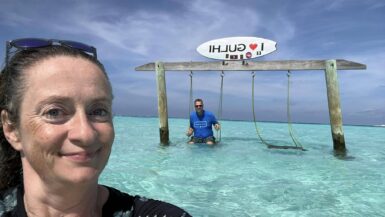
Maldives: While this post is not about the Maldives, Sri Lanka is very close to the Maldives. Many people we spoke with were tacking on a visit to the Maldives following their trip to Sri Lanka. It might be a once-in-a-lifetime opportunity to visit one of the most spectacular countries in the world. We did and we loved it!!!