An extensive travelogue of our 21-day cruise from Lisbon to Cape Town. Highlights include the volcanic Canary Islands, the haunting history of Gorée Island (Senegal), the jungle beauty of São Tomé, and the desert landscapes of Walvis Bay (Namibia)
21 Days on the Atlantic: From Portugal's Gardens to the Gates of Cape Town
Our 21-day voyage from Lisbon to Cape Town began with excitement, anticipation, and a little curiosity about the unexpected itinerary changes ahead. What started as a cruise through Morocco and the Gambia shifted into an adventure across Portugal’s Atlantic islands and the coast of West Africa — an unforgettable start to our journey south.
Leaving Lisbon – The Adventure Begins
We boarded the Norwegian Sky on November 16, 2024, ready for three weeks at sea. The first day was a sea day — a welcome chance to rest, explore the ship, and meet the other travellers who would soon become familiar faces. Over dinners and trivia games, we began to connect with people from around the world, many of whom had visited more countries than we could count.
"Our first day was a sea day which was fine as it was good to have a bit of a rest, get to know the ship and we met all sorts of people." — Nicola
Part 1: Portugal’s Atlantic Islands (The Warm-Up)
Funchal, Madeira – Portugal’s Floating Garden
Our first stop was the beautiful island of Madeira. It was a wonderful blend of Portuguese charm, steep hills, and lush gardens. From the ship, the view of Funchal was spectacular — the city spilling down the hillside toward the harbour.
We explored the farmer’s market, admired the black-and-white cobblestone streets, and took a long gondola ride up to the botanical gardens above the city. From there, we had sweeping views over the ocean, watched the clouds roll in, and even got caught in a quick rainstorm.
"The cloud started rolling in on the way up. Then the rain came down hard for about 20 minutes. Luckily there were plenty of places to wait it out and we got to use our raincoats that we have been lugging around for months." — Nicola
La Palma – Black Sands and Balconies
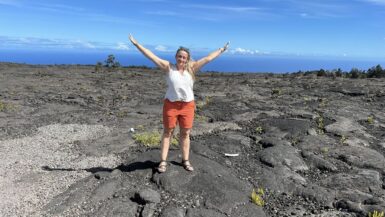
Our next stop was Santa Cruz de La Palma, one of the smaller Canary Islands. The town had a relaxed charm with its black sand beaches, volcanic craters, and vibrant balconies lining the narrow streets. We wandered along the waterfront, admired the sculptures on the beach, and enjoyed the ocean breeze with new friends.
"This first one was Santa Cruz de la Palma. It is a really nice town to wander around. It is volcanic so black sand beaches and volcanic craters. We didn’t go to the crater, maybe we should have." — Nicola
Arrecife, Lanzarote – Volcanic Coastlines
Our stop in Arrecife, Lanzarote, revealed the island’s unique volcanic landscape. Although the long walk into town took far more effort than expected, the coastal path was lovely, and the volcanic rock architecture gave the city a distinct feel.
"The ship said that the walk into town is 10–15 minutes… It ended up being close to an hour to get there. It is 5:00 and I have done 23,500 steps. Left some shoe rubber in Lanzarote." — Nicola
Tenerife and Gran Canaria – Urban Energy and Island Culture
Our final European ports were Tenerife and Gran Canaria — the larger and busier of the Canary Islands. Santa Cruz de Tenerife was bustling and industrial, yet its architectural landmarks, like the whale-shaped auditorium, gave it character. We stayed late into the evening to watch the city lights flicker to life over the harbour.
In Las Palmas, we hopped on a local bus to the old town, explored cathedrals and castles, and even found a cozy café in a park surrounded by Christmas decorations. The city felt festive and warm — a strange but delightful mix in late November sunshine.
"Last stop, Las Palmas. This is also a big city but had a nicer feel… Getting set up for the Christmas markets. Feels weird when it is 28 degrees." — Nicola
Part 2: Crossing the Threshold to West Africa
Leaving the comfort of Europe behind, our ship set course across the Atlantic’s warmer waters toward Africa. We had already covered hundreds of nautical miles — and we knew that the real adventure was still to come. Ahead lay the shores of Senegal, Ivory Coast, São Tomé, Angola, Namibia, and finally, South Africa.
Dakar, Senegal – History and Culture
Dakar was our first port in Africa, a place both heavy with history and full of colour and rhythm. We joined a ship-organized tour to visit Île de Gorée (Gorée Island), a UNESCO World Heritage site and a crucial memorial to the transatlantic slave trade.
“First stop in Africa – Dakar, Senegal. I really wanted to go to Gorée Island as it is the thing to see here… The ferry ride over was lovely and the island is delightful.” – Nicola
The “Door of No Return” was haunting — a literal passage through which enslaved Africans were sent to ships waiting offshore. Despite its dark past, Gorée Island itself is unexpectedly beautiful. Bougainvillaea spills over the crumbling French-colonial buildings, and cats nap in doorways painted in faded pastels. The experience put the entire voyage into sharp perspective.
Abidjan, Côte d’Ivoire – Urban Energy and High Modernity
Next came Abidjan, the bustling economic heart of the Ivory Coast. It’s a massive city that hums with energy and contrasts — grand cathedrals beside open-air markets, and towering modern glass structures. We set off on a free walking tour, weaving through the Plateau district, which locals proudly call "the Paris of West Africa."
We visited the striking Basilica of Our Lady of Peace, admired stained glass, and watched a wedding procession at a nearby mosque. A mid-day rainstorm cooled the streets — giving us an excuse to duck into a café for a beer.
“Côte d’Ivoire – Abidjan. I think the biggest city but not the capital. Very busy. I am getting used to the smells, noise and chaos of Africa. I love being back!” – Nicola
São Tomé and Príncipe – Island Isolation and Colonial Beauty
If there was one destination that captured our hearts, it was São Tomé. An island nation few have heard of, it felt isolated and frozen in time. We tendered ashore and shared a van with four Germans we’d met onboard, winding our way up narrow jungle roads into the island’s lush interior.
The air was thick with humidity and the scent of wet earth. We visited an old Portuguese coffee plantation, now run as a local cooperative, where colonial-era buildings crumble slowly under vines and time.
“Our next stop was São Tomé… It might have been my favourite stop. We hired a van for six of us to drive into the centre of the island. Not the highest or biggest waterfall, but the jungle surrounding it was so lush.” – Nicola
Luanda, Angola – Oil Wealth and Poverty
From São Tomé, we continued south to Luanda, Angola — a city of extremes. We were immediately struck by the towering oil rigs visible from the deck and the blend of conspicuous wealth in the city centre against the visible poverty in the outskirts.
Our visit coincided with a high-profile diplomatic event (U.S. President Joe Biden was in town), which meant high security and street closures. We explored the Coin Museum, the Iron Palace, and the waterfront promenade. Angola’s Portuguese influence is everywhere, but the spirit is purely African: proud, resilient, and creative.
Walvis Bay, Namibia – Desert Meets the Sea
Our final port before disembarking was Walvis Bay, Namibia — a calm and unexpectedly charming town perched between the Atlantic and the vast Namib Desert. The approach revealed an otherworldly view: sand dunes on one side, shimmering ocean on the other.
We walked the coastal path, watched flamingos wade in shallow pink waters, and met the friendliest locals of the whole cruise. The town’s German colonial heritage was evident, giving it a unique, orderly feel.
“This (flamingos on the beach) was the main thing to see in town. I thought they would be far out, but they were surprisingly close. Everyone was so welcoming and helpful.” – Nicola
Life at Sea & Final Reflections
Life onboard the Norwegian Sky during these three weeks was an adventure of its own. With 1,900 guests and 800 crew, the ship became its own floating village. Between ports, we filled our days with trivia games, live shows, and endless meals.
“Our trivia team may not have won, but we forged some pretty good friendships. The food was maybe too good… three-course meals every night! Luckily there was a lot of walking while on land.” – Nicola
The 21-day cruise stitched together a mosaic of worlds — European order, African chaos, island serenity, and ocean vastness. It was a journey through history, economy, and culture.
We docked in Cape Town on December 7th, disembarked, and were immediately struck by the sight of Table Mountain rising majestically over the city, shrouded in its famous “tablecloth” of clouds. The voyage was about discovery, perspective, and gratitude for the privilege of seeing the world—not from a screen, but from the deck of a ship cutting through the Atlantic swell.
Next Up: South Africa awaits!