A 23-day cruise from Genoa to Mauritius! We sailed through the Suez Canal, snorkelled the Red Sea, and visited the high-cost islands of Seychelles and Réunion. We share our experience with Costa Cruises, the pirate protocols, and why this budget cruise was the perfect way to get to Madagascar.
Several months ago we did a cruise along the Norwegian fjords and up to Svalbard. On that cruise, one of the waiters was from Madagascar. We asked him tonnes of questions and our desire to visit Madagascar began to grow. Getting there is expensive though; especially as we started to look at flights to island hop including Seychelles, Reunion and Mauritius. These are all expensive islands to get to and to stay in. We found a cruise that started in Genoa, Italy and made its way to all of these islands.
The cruise is with Costa. It is an Italian company that perhaps became most well-known when one of them sunk several years ago. The captain was charged because he was intoxicated. Nevertheless, I am sure they have taken extreme precautions to make sure that doesn’t happen again.
The cruise is 23 days long. We departed Genoa, Italy on October 3rd and disembarked on October 26th in Mauritius. It cost us 1389 euros per person which is about 60 euros per night. We typically have a budget of about $100 CAD per night each. This cruise is a bargain considering it includes our transportation, meals, and accommodation. About two weeks after we booked it though the cost dropped to 1189 euros… rarely do we not get the best deal. That said, most people on board paid much more than us.
Naples
From Genoa, we sailed to Naples. We walked from the cruise ship into the centre of the old town area and did a free walking tour to learn more about Naples. Our guide was pretty good and also taught us about Neapolitan people. For example, their use of hands in everyday communication is very famous. I am not sure it is unique to Neapolitans but apparently they have their own dialect and vocabulary including with body language. Dante’s Piazza was buzzing, our guide kept us moving, and of course we paid homage to the home of pizza.
Catania & Mount Etna
After Naples, we headed to Catania, the largest port city in Sicily. We had planned to take a local train that circumnavigates Mount Etna, but it was Sunday and apparently this train only goes on weekdays. Instead, we rented a car and drove up to Mount Etna. It is still quite an active volcano—we could see puffs of smoke every few minutes. The drive up was spectacular, and Catania itself had great energy (including a lively fish market and an umbrella-covered street).
Heraklion, Crete
Next, we sailed to Heraklion, Crete. We’d been here on our Mediterranean cruise in 2013, so this time we just explored the city. We wandered, grabbed spanakopita from a bakery, tried a couple of local beers, and even did the fish foot spa. Nic giggled the whole time.
Transit: The Suez Canal
After Crete, we sailed through the Suez Canal. It took about 15 hours end-to-end. Egypt was still on the ship’s red list so we couldn’t stop, but transiting the canal was an experience in itself.
Eilat, Israel
From here, we sailed to Eilat. We had been in Aqaba, Jordan back in August which is only about 15 km away, so for us the Gulf of Aqaba and the Red Sea are all about the snorkelling. Instead of an expensive, long excursion to Jerusalem, we took a local bus almost to the Egyptian border and found a beach. The snorkelling was spectacular—clear water, vibrant coral, and loads of fish.
Aqaba, Jordan
After Eilat, we sailed across the bay to Aqaba. We knew from our last visit that South Beach is the place for snorkelling, so we headed to the Berenice Beach Club (10 JD each). We scored a shaded gazebo with two loungers, snorkelled for more than an hour, and soaked up the Jordanian warmth. When we were done, we shared a taxi back with Donatella and Edward from Chicago.
Pirate Protocols
Sailing from the Suez Canal to shortly before Seychelles meant passing through areas known for piracy. The crew briefed us on protocols. At night the windows were blacked out and we sailed near top speed. No run-ins with Jack Sparrow to report.
Salalah, Oman
Four sea days later we reached Salalah. It’s not a very touristic place, but we made a day of it. We took a local bus toward the big mosque, then comedy struck: Nic got off two stops early, a woman from Reunion followed her, and I was still chatting on the bus. A kind French lady nudged me—“I think your wife got off.” Cue an unplanned hot, sweaty 2 km walk in extreme heat. We did make it to the beautiful (and very new) mosque. The Sultan paid for it himself. From there we went to the gold souk where Nic picked up a silver camel necklace and a ring, then walked to the beach and a small market. By the end I was feeling cooked—12 km under a scorching sun will do that—so we bussed it back.
Seychelles
Next was Seychelles. We hadn’t done much research beyond knowing we could bus around and that it’s expensive. With about 29 hours in port, we rented a car with Donatella and Edward, hit a beach to snorkel (a bit murky), and looped the island. The next morning we walked to the botanic garden in intense heat and humidity, saw the giant tortoises, and tracked down the tiny clock tower “landmark.”
La Réunion (France)
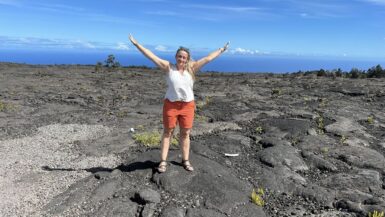
From Seychelles we sailed to La Réunion, which is part of France. President Macron was visiting—lots of traffic and planned protests—so we rented a car again with Donatella and Edward and avoided the capital, Saint-Denis. Réunion isn’t good for swimming or snorkelling: rough seas and sharks. We drove most of the coastline, tried to climb one of the pitons but got fogged out, and crossed a road over old lava flows. After we left, we met some girls from Réunion in Madagascar who showed us photos of the volcano erupting—our timing was off by days!
Mauritius
Finally, we reached Mauritius. We didn’t try to do everything because we’ll be back for five days after Madagascar. We hung out in Port Louis on day one, then headed to the airport the next day for our flight.
Life On Board
We had a great dinner table: Jim and Assumpta O’Mahoney from Cork, Ireland; Nils-Jorgen and Inge Sorensen from Denmark; and Bjarne and Edit Dueholm from Denmark. Lots of laughs and easy conversation every night.
As on every cruise, I loved trivia. Our team included Leonard, Zelinda, Marissa and Arthur (Arthur and Rozella from Montreal). We hit the gym most sea days; Nic often did the morning stretching on the pool deck. We went to a show most evenings—some excellent, some just okay—and the six-language announcements kept things interesting.
Wrap-Up
All in all it was a good cruise. It served its purpose: we unpacked our backpacks, saw a string of places that would have been pricey to reach on their own, and landed in Mauritius. Next up: 24 days in Madagascar.
Reflection
This cruise reminded me why we travel the way we do. We could never have afforded to hop to Naples, Sicily, Crete, the Red Sea, Seychelles, Réunion, and Mauritius on separate flights and hotels, but the ship turned those dots into a line we could follow without repacking every two days. Sea days forced us to slow down (gym, trivia, stretching, sunsets) and that pace made the port days feel sharper—pizza in Naples, smoke curling off Etna, snorkelling over Red Sea coral, lava fields on Réunion.
It also underscored the trade-offs. Cruises are great at breadth, not depth. A place like Seychelles deserves more than a loop by car and a sweaty walk to the botanic garden; Salalah was tougher to love on a scorching bus day. We still made good choices for us—skip the marathon bus tours, find a local beach, say yes to new friends at dinner—and we kept our budget mostly intact even when plans changed (looking at you, Etna train schedule and last-minute rentals).
Biggest lessons: double-check “weekday only” transport before you build a plan around it, expect port logistics and politics (Macron’s visit, canal rules, pirate protocols) to nudge your day, and remember that the best stories usually come from the small stuff—sharing a taxi, getting off two stops early, or winning (or losing) at trivia with strangers who don’t feel like strangers by the end. The cruise did exactly what we needed: it carried us forward, and left enough curiosity in its wake that we want to come back on our own steam next time.