
Our complete 3-week Morocco journey through chaos and colour. Highlights include: navigating the Fez medina, camel trekking in the Sahara Desert (Merzouga), relaxing in the blue city of Chefchaouen, hiking the Dades Gorge, and eating fresh seafood in coastal Essaouira.
Our three weeks in Morocco provided a completely different rhythm compared to Africa—a mesmerizing mix of colour, chaos, and moments of profound calm. After weeks of African cuisine, our stomachs were ready for a break from endless tajines, but our memories are full. Here is the best of our journey through Casablanca, the Imperial Cities, the Sahara, and the Atlantic coast.
Part 1: Imperial Cities & The Blue Maze
Casablanca – A Quick Introduction
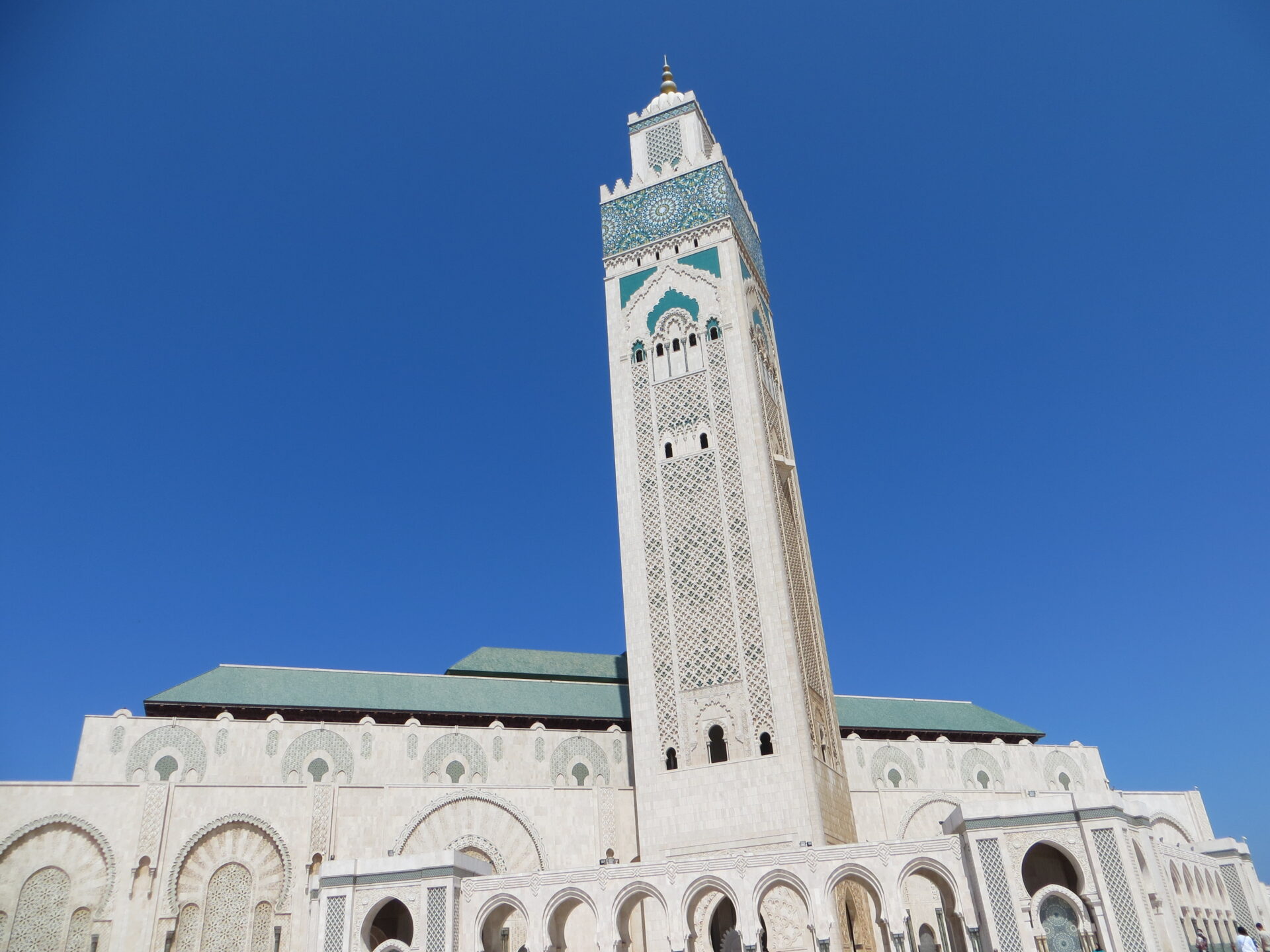
We landed in Casablanca from Dubai, and though it’s not primarily a tourist city, it served as a great introduction. We stayed at the Moroccan House Hotel, a charming older building full of colourful tile work and ornate archways. The highlight was visiting the Hassan II Mosque, the third-largest mosque in the world, with its stunning minaret and a rare chance to see inside. For novelty, we even splurged on a $90 meal at Rick’s Café—a recreation of the famous movie setting.
Fez – Navigating the Old City
From Casablanca, we took the train to Fez, the cultural capital. We stayed inside the Medina (the old walled city where no cars are allowed) at Dar Lalla Kenza. The medina is a dense maze where getting lost is part of the experience. We visited the famous tanneries, watching hides softened and dyed in bright colours, but noted that scams targeting tourists—like guides leading you to family shops—were common, testing our trust.
The biggest challenge was an ongoing digestive issue. We found a doctor in the Nouvelle Ville—a $52 CAD visit that included four prescriptions and a rewarding stop at McDonald’s. It was the best money spent on the trip.
Chefchaouen – The Blue City
After Fez, we took a famously bumpy bus ride north to Chefchaouen. This town is as photogenic as promised, with pastel blue buildings winding up the hillsides. We explored the square, sampled local tajines, and hiked up to the abandoned Spanish Mosque for sweeping views of the medina. Despite the pervasive offers of marijuana (earning it the nickname “Amsterdam of Morocco”), we stuck to mint tea and enjoyed the atmosphere.
Part 2: The Sahara, Mountains, and Marrakech
Desert Safari: From Sandstorms to Starlight
From Fez, our adventure continued with a 3-day desert trek. We opted for an 8-hour private taxi to Merzouga—a worthwhile splurge to avoid the overnight bus. We joined a group of fellow travellers for a thrilling 4x4 ride into the desert, battling a brief but intense sandstorm that felt like a "brown blizzard."
- The Dunes: We climbed the tallest dune we could see, an exhausting but rewarding accomplishment, though a second sandstorm at the top gave us a painful 60 kph sandblasting.
- Camel Trek: We mounted camels for a 90-minute ride into the vast Sahara. Though the saddles were notoriously uncomfortable, the sight of the sun setting over the endless dunes was truly breathtaking.
- Berber Camp: We spent the night in a circle of semi-permanent tents. Despite the desert not being entirely silent, we slept under the bright moonlight, enjoying dinner and traditional Berber music.
Through the Atlas Mountains
After riding the camels back at sunrise, we travelled through the mountains toward the Dades Gorge. We landed at Auberge Panorama in Boumalne de Dades, which offered balconies perfect for drying our sand-soaked gear. We hired a local guide for a 10 km hike through the gorge, wading rivers and soaking up five hours of desert-mountain scenery. Our journey also included a stop in Ouarzazate to tour the Atlas Film Studios, where countless desert movies were shot.
Marrakech – The Carnival City
We arrived in Marrakech in pouring rain and settled eventually at the Marrakech Rainbow Hostel, a welcoming spot in the heart of the medina. Djema El Fna Square was overwhelming and fascinating all at once—a carnival of snake charmers, trained monkeys, and henna artists. The endless winding souq alleys required a GPS watch to navigate. We also experienced a traditional Hammam, which was a less relaxing massage and more vigorous stretching and cracking—unforgettable!
Part 3: Seafood, Sea Air, and Saying Goodbye
Essaouira – The Coastal Calm
We took a bus west to **Essaouira** ($9 each for 2.5 hours). This beautiful seaside town offered a welcome slower pace. The biggest highlight was lunch at the port: we loaded a tray with fresh sea bass, shrimp, crab, and prawns for 250 MAD (about $30 total), enjoying one of the best meals of the trip—and happily, it came with a "no sickness guaranteed" promise. The town was much more relaxed than Marrakech; the shopkeepers were less pushy, and the beach was perfect for watching kiteboarders and local acrobats, though the Atlantic water was freezing.
Final Days in Marrakech
We returned to Marrakech for our final days, using the time to regroup and shop. We visited the Artisan Ensemble (the government-run craft market with fixed prices) to gauge prices before entering the souqs. We bought a few souvenirs: a round metal lamp, a small blue Berber rug, a pouffe, and a scarf. We found a box and shipped the items home for about $70—a worthwhile cost for souvenirs of the adventure.
For one last dinner, we braved the night market in Djema El Fna, picking Tent #25, which hilariously advertised "Guaranteed No Diarrhea for 2 Years." The food was unfortunately bland and overpriced, proving that sometimes novelty outweighs quality.
Reflections: Morocco was a country of contrasts—wild and calm, old and new, overwhelming and beautiful. It tested our patience in the chaotic souqs and stole our hearts in the silent desert. We're leaving with full backpacks, full bellies, and a deep appreciation for the colour, culture, and chaos that make Morocco so unforgettable.
Onward Again: We are now in London, taking a brief break before the next stop: Madrid.

