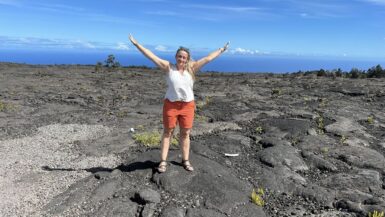
The first leg of our month-long South Pacific cruise took us from Fiji to Tahiti! We detail the dramatic boarding scare, snorkeled the spectacular reef at Dravuni, enjoyed the cultural centre in Samoa, explored the beautiful Cook Islands, and finally reached the paradise of Bora Bora and Moorea.
When we boarded the Norwegian Sun in Fiji, it marked the beginning of a long, two-part journey across the South Pacific. Nicola and I would spend nearly a month at sea, sailing from Fiji through the Cook Islands, Samoa, and French Polynesia before disembarking in Honolulu. This post covers the first leg of that voyage — from Fiji to Tahiti — a stretch filled with unpredictable weather, vibrant cultures, and the kind of small moments that make travel so deeply memorable.
Fiji: A Rocky Start and a Lucky Turn
We arrived in Fiji full of excitement, ready to check in and settle into what would be our floating home for the next month. Instead, we found ourselves sitting off to the side in a resort lobby while staff “figured something out.” Eventually, the manager appeared with a letter saying we couldn’t board due to a “lack of availability.” After flying across the world, the words barely made sense. The idea that the ship was full — and that we were suddenly without a cabin — was hard to wrap our heads around. Even the manager admitted she’d never seen it happen in her twelve years on the job. In a strange twist, we were given day passes to the resort and told we could charge our meals to their bill while they tried to sort things out. So, we did the only sensible thing: we made the most of it. We ordered good food, enjoyed the sunshine, and tried to laugh about it. Eventually, the problem was solved — the entertainers were moved to staff accommodations, and we were given their cabins. It was an unexpected outcome, but we were overjoyed and deeply relieved. We ended up in a window cabin instead of the inside room we had booked, complete with a view across the walking track. When I went outside to check, yes — you could see in.
 Our first stop was the tiny island of Dravuni — just 0.8 square kilometres and home to about 125 people: no cars, no shops, just palm trees, a small school, and warm smiles. The last time we’d been here, five years ago, it had poured rain, and in a twist of déjà vu, it did again. But Fijian rain passes quickly and warmly, and soon we were climbing to the island’s high point, taking in sweeping views of the turquoise reef below. Nicola spotted the coral from above and couldn’t resist going in for a snorkel, dry-bagging her phone after realizing she’d left her waterproof camera at home. The coral was spectacular — among the healthiest we’ve seen — though strangely, there weren’t many fish. Still, swimming above the fourth-largest reef in the world felt like a perfect start to the voyage that almost didn’t happen.
Savusavu: A Day of Rain and Resilience
A few days later, we found ourselves in Savusavu, Fiji — a place as lush and alive as it is unpredictable. It poured, hard and often, from morning to evening. Still, we were determined not to waste the day. We met up with a fellow passenger from the ship and shared a taxi for an hour-long tour of the island, passing beautiful resorts tucked into green hillsides. Many were owned by foreigners, though one in particular caught Nicola’s attention — a sprawling retreat owned by Tony Robbins, running thousands of dollars a night. “I don’t know him,” she said, “but apparently famous.” The rain let up just long enough for us to admire the lilies at one resort and to see floating huts that had once drifted inland during a hurricane, ending up on higher ground across the road. Nature has a way of rearranging things here, and somehow it still looked perfect. We also stopped at a pearl farm to learn about Fijian saltwater pearls — a fascinating process, though the prices were well above our souvenir budget. Nicola happily found some freshwater pearls instead at the local market.
 The weather teased us all day — sun, then cloud, then sun again. Finally, when the skies cleared, we took a cab to a recommended snorkelling spot. The ocean looked calm enough at first, but before long, big winds rolled in and heavy rain followed. Nicola and another swimmer were caught offshore as I waved from the beach, trying to signal them back. The waves were strong, and coming in too soon would’ve meant crashing against the coral. She came back a bit scratched up but smiling — one more story from a day that didn’t go as planned, yet somehow felt perfectly real.
Apia, Samoa: Warm Rain, Warmer Welcome
By the time we reached Apia, Samoa, the weather still hadn’t cooperated — warm rain came down in sheets — but we weren’t made of sugar, so we walked into town anyway. The city felt lush and alive, the kind of green that can only come from daily downpours. We ducked into the main church, where the ceiling was beautifully painted and the centre of the sanctuary carried a distinctly local touch. When the rain eased, the exterior gleamed as if freshly washed.
 We lucked into performances at the cultural centre and ended up staying for far more than a show. First, we learned to weave our own plates for the meal to come — Nicola picked it up quickly and helped our neighbours. Then came demonstrations that felt as old as the islands: men preparing food over fire, a fish wrapped in leaves and bound in a woven sheath before it disappeared into the coals.
  The host had a great sense of humour and kept the crowd laughing, even as he explained the “hard work” the men were doing. When the food emerged — greens simmered in coconut milk and that smoky fish — it was simple and absolutely delicious. Ten U.S. dollars each for the whole experience felt like the deal of the trip.
American Samoa: Be Humble and Carry On
We certainly weren’t getting the dry-season weather we’d hoped for, but at least the rain was warm. Our stop in American Samoa came wrapped in low clouds and steady drizzle, yet the island greeted us with smiles and a sense of calm. The last time we were “here,” the ship wasn’t even allowed to dock — just anchored outside the marine sanctuary to refuel while a bloom of jellyfish drifted between us and the shore, almost as if to keep us away. This time, we were welcomed fully, and it felt good to step onto land. The local buses were lined up by the port, offering three-hour island tours for twenty U.S. dollars. We climbed aboard what was cheerfully named the Be Humble Express. Our driver didn’t seem to speak much English — most of our questions were met with a polite “I don’t know” — but it hardly mattered. The island was beautiful, even in the rain, and we made several stops along the way. One was the site of the devastating 2009 tsunami that struck this part of the coast, where memorials mark the “sunrise” and “sunset” of each life. The simplicity and tenderness of that wording stayed with me.
 We passed gardens overflowing with tropical flowers and small family homes where graves were carefully tended in the front yard — the families and their ancestors sharing the same view of the sea. Everywhere, bright village signs stood proudly by the roadside. We learned of the local legend of a girl and her grandmother who, after being accepted by one village, returned to the sea — a song can still summon them back, they say. We didn’t sing, but the turtles came anyway, surfacing in rough water like a small miracle. Even with grey skies, it was a place of quiet beauty.
 .
.Cook Islands: Aitutaki and Rarotonga
The Cook Islands were a welcome sight — even with a bit of humidity and haze, they were stunning from the moment we approached. We visited two islands, Aitutaki and Rarotonga, each offering its own charm. On Aitutaki, we caught a ride to the beach in the back of a pickup truck, chatting with our driver about the island’s new laundromat and local takeaway shop. His warmth made the short trip memorable, and somehow, we ended up with a truck all to ourselves. The beach was picture-perfect — soft sand, clear water, and the kind of quiet that makes you breathe slower. There wasn’t much snorkelling, to Nicola’s disappointment, but the beauty of the lagoon more than made up for it. In Rarotonga, the weather turned grey again, but as Nicola said, “If you’re snorkelling, you’re already wet.” The tender ride to shore was surprisingly smooth, and once on land, we discovered an easy local bus loop that made exploring simple. Nicola swam across to a small island offshore while I stayed back with a cold beer and fish and chips, watching glass-bottom boats glide by. The sunset that night painted the clouds in gold and coral, the perfect end to our Cook Islands visit.
Bora Bora, Raiatea and Moorea: The Heart of Paradise
If there was one stretch of the cruise that felt like pure postcard perfection, it was our time in French Polynesia. Bora Bora had been on our list for years, and it didn’t disappoint. The sail-in was magical — the colours of the lagoon shifting from turquoise to deep sapphire as the sun rose. While I toured the island with friends, Nicola joined a snorkel trip surrounded by stingrays and reef sharks. Someone on the boat took a video of her swimming among them — calm, curious, and completely at home. The coral gardens were vivid, alive with colour, and the water so clear it felt unreal. On the way back, we passed rows of overwater bungalows, still shuttered since before COVID, their quiet beauty a little haunting.
 Moorea was every bit as dramatic — steep volcanic peaks rising straight from the sea, the kind of landscape that makes you stare in silence. We took a day trip to a small private island where the water was so clear it felt like floating in an aquarium. Our guide had a bag of fish parts that made him instantly popular with the sharks and turtles that gathered nearby. Nicola was in her element, camera in hand, while I simply watched it all unfold. The day ended with one of the best sunsets of the trip — a glowing sky that seemed to last forever.


Tahiti: The Turning Point
After Moorea came Tahiti — the end of the first leg and the beginning of the next. We had two days in port, which gave us time to explore the capital and its rhythms. Along the waterfront, murals brightened the concrete, and a long park stretched beside the harbour. In the water, artificial reef platforms have been built to help restore marine life — a simple, hopeful touch. The market was alive with colour and music, and the scent of fresh fruit and grilled food filled the air. We even stumbled across a traditional arts demonstration, where we learned how banyan tree bark is turned into cloth by soaking, scraping, and pounding it thin. “Mama,” the woman teaching me, laughed kindly and said, “It is ok, you can be done now,” as I kept hammering away. It was the kind of experience you can’t plan — equal parts fun, humbling, and memorable.
 We finished our time in Tahiti sharing a final dinner with friends made along the way — including our German travel companion, Juergen, from the first leg, who we hadn’t realized we’d miss until he was gone. As the ship prepared to take on new passengers, it felt like closing a chapter. The South Pacific had already given us more than we expected — beauty, challenge, laughter, and a month’s worth of memories. The next leg would take us farther north toward Hawaii, but that’s a story for another post.

Reflections on the First Leg
This first leg of the journey was a reminder that travel doesn’t need perfection to be extraordinary. The rain came often, plans changed, and we were tested more than once — but in every twist there was something to appreciate. From the coral of Dravuni to the humour of Samoan hosts, from the friendliness of Cook Islanders to the magic of Bora Bora sunsets, each stop offered its own rhythm. Travelling with Nicola made it all richer — her curiosity, her laughter, her ability to find joy in small details. By the time we reached Tahiti, we felt both full and ready — ready for new horizons, calmer seas, and the continuation of a voyage that had already captured our hearts. Next stop: the second leg — from Tahiti to Honolulu. More islands, more sea days, and a few surprises still to come.